
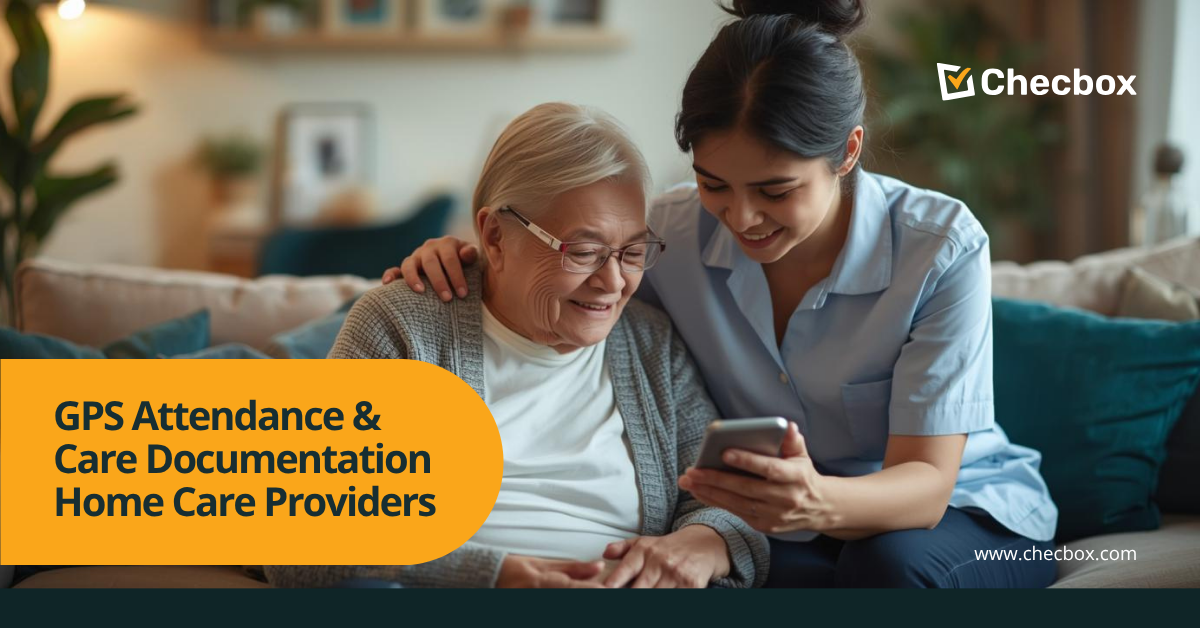
The Philippines has a large and growing home care sector, driven by an ageing population, a strong cultural preference for family-based care supplemented by professional caregivers, and a growing middle class able to afford professional home care services for elderly parents. Home care agencies — ranging from small family-operated services to larger licensed agencies — provide caregivers to clients in their homes for everything from basic companionship and daily living assistance through to post-surgical care and chronic condition management.
Managing a home care agency operationally is a specific challenge. Unlike office-based businesses, your entire workforce is distributed — one caregiver per client home, spread across a city or province, with no easy way to verify attendance, ensure care note quality, or maintain the documentation standards that both clients and regulatory bodies expect.
The Philippine home care sector
Philippine home care agencies operate under licensing requirements from the Department of Health (DOH) and have varying obligations under PhilHealth’s care documentation standards when providing PhilHealth-reimbursable services. The Department of Social Welfare and Development (DSWD) regulates residential care facilities and has documentation expectations that extend to community-based care providers.
Beyond regulatory requirements, the practical challenge for home care agency owners is one of accountability without surveillance. Caregivers are trusted professionals working in private homes. The agency cannot station a supervisor at every home. But the agency does need to know that their caregivers are attending on schedule, providing the care that was contracted, and documenting that care in a way that protects both the client and the agency in any dispute or complaint.
GPS-verified home visit records
When a caregiver arrives at a client’s home, they check in on the Checbox app. The GPS confirms their location at the client’s registered home address — not just that they checked in from somewhere nearby. The time is recorded precisely. When they leave, they check out. The complete visit record — who, where, when, for how long — is stored permanently and accessible to the agency coordinator from the web dashboard.
For home care agencies, this GPS visit verification answers the question that every agency owner loses sleep over: if a client or their family member claims the caregiver did not attend, or attended late, or left early, the agency has an objective, GPS-verified record. The conversation moves from a credibility dispute to a data review.
Digital care notes replacing paper
Care notes completed on paper at the end of a shift are less accurate, less detailed, and less useful than care notes completed at the client’s home immediately after care activities. In Checbox, the caregiver completes the care note in the app before checking out — it becomes part of the visit record rather than a separate document created later.
Care note forms in Checbox are structured with specific prompts relevant to the client’s care plan: medications administered, meals consumed, mobility observations, mood and wellbeing, hygiene activities, any incidents or concerns, and the caregiver’s recommendations for the next visit. This structure ensures consistency across all caregivers and all visits — a client whose regular caregiver is absent still receives care notes to the same standard from the substitute caregiver.
Scheduling and carer assignment
Home care scheduling — matching available caregivers to client visits, managing leave and absence, covering unexpected gaps — is one of the most time-intensive administrative tasks for agency coordinators. In Checbox, the scheduling module shows the coordinator which clients have visits scheduled for each day, which caregivers are assigned, and any coverage gaps requiring action. Caregiver leave requests submitted through the app appear immediately in the coordinator’s dashboard, enabling proactive replacement rather than reactive crisis management.
Billing from completed visits
For agencies that bill clients based on hours of care delivered, Checbox’s billing module generates invoices from completed visits automatically — hours calculated from GPS check-in and check-out times, rates applied per care type and client. Integration with Xero or QuickBooks means invoices sync to the accounting system without manual entry.
Frequently asked questions
Does GPS check-in work in apartment buildings and high-rise residential areas common in Metro Manila?
GPS accuracy is reduced inside dense concrete structures, which is a known limitation of satellite positioning. In most residential apartments, GPS accuracy is sufficient to confirm the caregiver is in the correct building and floor area. For agencies requiring more precise indoor verification, QR code check-in — scanning a code posted in the client’s home — provides precise location confirmation regardless of satellite signal quality.
Can care notes be shared with the client’s family members or medical providers?
Care notes in Checbox can be exported as PDF reports and shared with client families, medical providers, or case managers — subject to the client’s consent and the agency’s privacy policy. Automated report scheduling is available for families who want regular care summaries without requesting them manually.
Does Checbox support agencies with both live-in and daily visit caregivers?
Yes. Checbox handles both service models. Live-in caregivers can check in and out for specific care activities within their shift. Daily visit caregivers use the standard GPS check-in at the start and end of each visit. Different billing rates per service model and per client can be configured in the billing settings.
Book a free demo for Philippine home care agencies →
Or message us on Messenger/WhatsApp: +61 450 132 620

Content Writer